History and Traditions of Diamond
Diamonds have a long history as beautiful objects of desire. In the first century AD, Roman naturalist Pliny the Elder stated, “The diamond is the most precious, not only of precious stones, but of all things in this world.”

The D-color Graff Lesedi La Rona weighs 302.37 carats and is currently the largest square emerald-cut diamond in the world. The original rough, weighing 1,109 carats, is currently the fourth largest diamond and the second largest gem-quality diamond ever found. It was found in the Karowe mine in Botswana in 2015.
The world’s love affair with diamonds began in India, where diamonds were harvested from the country’s rivers and streams. Some historians estimate that India was trading in diamonds as early as the 4th century B.C.
The country’s resources produced limited quantities for an equally limited market, namely India’s very wealthy classes. Gradually, however, that changed. Indian diamonds, along with other exotic goods, found their way into Western Europe via caravans traveling to the medieval markets of Venice. By the 1400s, diamonds were becoming fashionable accessories for the European elite and beyond.
In the early 1700s, when India’s diamond supplies began to dwindle, Brazil emerged as a major source. Diamonds were discovered in prospectors’ pans as they sifted through local river gravels. Once Brazil reached its full potential, it dominated the diamond market for over 150 years.
Natural diamond crystals formed millions of years ago in the Earth, at a depth of about 160 km and were brought to the surface much later by volcanic explosions. These eruptions formed narrow vertical pipes of an igneous rock called kimberlite. Kimberlite pipes are mined to recover diamonds and the mineral is mechanically broken down to release the crystals.
The amount of diamond in kimberlite is very low, about one part per million, so miners have to extract large quantities of the mineral to extract diamonds. Natural diamonds grow under specific conditions of pressure and temperature. The latter is much higher than that used to grow synthetic diamonds. So while at high temperatures, natural diamonds grow as octahedral crystals, synthetic diamonds obtained at lower temperatures grow as crystals with octahedral and cubic faces.
Synthetic diamonds are grown in a very short time, from several weeks to a little over a month, obviously in conditions different from the formation of natural diamonds deep in the earth. Because of the very short growth period, the shape of a synthetic diamond crystal is very different from that of a natural diamond.
But by the end of the 1700s the old ruling classes, the major consumers of diamonds, were in decline and the political upheavals that affected Europe in those years, such as the French Revolution, led to changes in the distribution of wealth.
The 1800s brought increasing wealth to Western Europe and the United States. Explorers discovered the first large deposits of South African diamonds in the late 1800s just as the demand for diamonds began to increase very quickly from all over the world and without any slight decline. The history of the modern diamond market really begins on the African continent, with the discovery of diamonds in 1866 in Kimberley, South Africa. Entrepreneur Cecil Rhodes founded De Beers Consolidated Mines Limited 22 years later, in 1888. By 1900, De Beers, through its mines in South Africa, controlled about 90% of the world’s rough diamond production.
South African sources have affected many segments of the diamond industry. This was especially true when diamond mining moved from the surface to underground. Due to the enormous costs and relatively low returns involved, the new sources forced the development of more efficient mining techniques. They created the need for better marketing. They also required improved cutting and polishing. All of these advances increased efficiency, reduced costs, and improved the appearance of the finished stones.
In 1870, annual rough diamond production was well under a million carats. By the 1920s, the figure was about three million carats. Fifty years later, annual production approached 50 million carats and by the 1990s had exceeded 100 million carats per year. By the late 1970s, the world’s leading producers of rough diamonds were South Africa, Zaire (now renamed the Democratic Republic of the Congo), and the former Soviet Union. In the 1980s, production of higher-quality diamonds from Russia and South Africa remained relatively constant, but Zaire’s production, although of lower-quality diamonds, more than doubled.
In 1982, a new, highly productive mine in Botswana added to world production. A prolific source of high-quality diamonds, the Jwaneng mine, boosted Botswana’s production so much that the country rose to third in the world in total diamond extraction and second in diamond value. De Beers contracted with the Botswana government to purchase the mine’s output, and Botswana decided to build its own diamond cutting industry.
Global diamond mining expanded dramatically with the discovery of sources in Australia in 1985 and major new deposits in northern Canada in 2000.
The market has probably changed as much since 1990 as it did in the years since the discovery of diamonds in 1866 in South Africa and the establishment of De Beers. The 1990s brought exciting new sources and encouraged dramatic growth in some cutting centers. All of this was happening while the world economy was swinging wildly. As a major participant in the trade, De Beers had to change as well. The De Beers of today bears little resemblance to the De Beers of 1989. The company has lost its role as a monopolistic gatekeeper to the diamond supply. Instead of flowing into the market in a single channel path from De Beers, diamonds now flow into the market through multiple channels. Not everything has changed, though. Regardless of the path they take, diamonds continue to flow from mines through cutting centers and finally to retail customers. The brilliance of the diamond has been appreciated for centuries, without much scientific knowledge until the twentieth century. Since then, knowledge of diamonds has grown steadily, with research by chemists, physicists, geologists, mineralogists and oceanographers. In the last 50 years alone, scientists have learned a great deal about how diamonds form and how they are transported across the Earth’s surface. This knowledge has made it easier to predict locations for new diamond discoveries.
Where Are Diamonds Found? Spotlight on Botswana Diamonds
Botswana is currently the world’s second largest diamond producer. Some of the world’s largest diamonds have been mined in these mines. Diamonds are the lifeblood of the African nation’s economy, helping to build infrastructure, support women’s development and fight AIDS. Botswana was ruled by the British Empire from 1885 to 1966. Considered a backwater with no natural resources, it was largely ignored by the British Empire. In 1966, it was one of the world’s poorest countries, with a per capita income of about $80 a year.
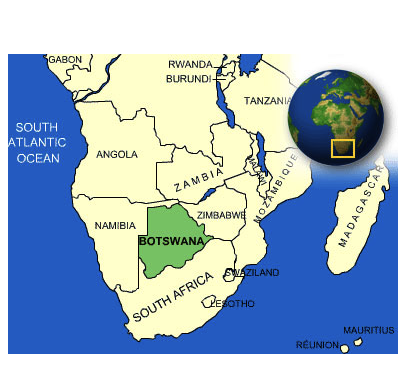
The discovery of diamond deposits changed that. In 1967, just a year after Botswana gained independence, De Beers discovered a huge kimberlite diamond vein in Orapa, a remote region about 400 miles from the capital Gaborone. This kimberlite pipeline is the second largest diamond producer in the world. Four years later, the Orapa diamond mine opened for production and became the world’s largest diamond mine by size. De Beers and Botswana quickly formed a 50/50 joint venture, becoming Debswana, a massive global diamond powerhouse that includes a $35 million state-of-the-art diamond sorting, grading and sales center called DTC Botswana. This is the largest facility of its kind in the world and has the capacity to prepare nearly 45 million carats of rough for market each year, or about 40% of the total annual diamond supply.
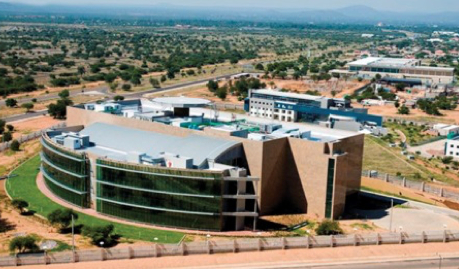
Debswana owns four mines – Orapa, Letlhakane, Jawaneng and Damtshaa – which produced 24% of the world’s diamonds by value in 2018, making it one of the world’s largest diamond producers. Debswana is also the country’s second-largest employer after the government. Its Jwaneng mine, nicknamed the “Prince of Mines,” is the world’s richest diamond mine, produces the most diamonds by value and is a notable mine in diamond history. The Botswana government owns about 15% of De Beers, giving it a huge say in how diamond revenue is collected and used. Thanks to negotiations by the Botswana government, much of the revenue generated by Debswana goes into the government coffers, and this revenue helps build schools and roads and bring water to homes and farms.
All of De Beers’s mine production from South Africa, Namibia, Botswana and Canada is consolidated at DTC Botswana, in a pre-sale sorting and evaluation process known as aggregation. While De Beers has fifty-five joint partnerships with governments in other African countries such as Namibia and South Africa, Botswana is by far its largest and richest source of diamonds today. Through agreements with Botswana, the vast majority of diamonds are purchased by De Beers for sale to the company’s “sightholders.” Although De Beers has traditionally been De Beers’s only customer, the 2006 renewal of the mining lease for Jwaneng stipulated that from 2013, 10-15% of production must be sold to the Botswana government-owned Okavango Diamond Company (ODC).
This agreement provides the government with its own direct sales channel for rough diamonds to customers around the world, bypassing the De Beers channel. Perhaps more importantly, a new 10-year sales agreement signed in 2011 included provisions for the relocation of the DTC, De Beers’s sales arm, from London to Gaborone. The aggregation of diamonds at the DTC Botswana precedes each of the so-called attractions, where select buyers from around the world gather to purchase rough lots. The attractions, held in London for nearly a century, moved to Gaborone following intense mining lease renegotiations with the Botswana government in 2004–2005 (Mokone et al., 2013). The move signals a historic shift and a significant disruption to De Beers’s traditional business model, removing a vestige of the control over diamond sales that the company has had since colonial times in South Africa.
As a result, over 60% of London-based staff relocated to Botswana in 2013 at a cost of over $120 million. Botswana has consistently pushed for the construction and creation of a domestic diamond manufacturing, cutting and polishing industry and has remained an elusive target until recently. Neighboring South Africa benefited from a well-established diamond cutting industry that employed several thousand workers.
Even so, much of this industry survived because De Beers subsidized local cutting operations by providing a roughly 10% discount (effectively saving buyers export taxes). Some of these operations existed primarily as a means for their owners to obtain rough allocations from De Beers. They performed minimal work on the stones in local factories before exporting them to Israel, Antwerp or India for actual production due to low production costs. Diamond production costs in Botswana range from just under $40 to $60 per carat, depending on the efficiency and technological capabilities of a given operation. These costs include labor, utilities, maintenance and technology support, and transportation. This cost range is much lower than Canada ($80 per carat) but still more than double that of China ($17 per carat) and four to six times that of India ($10 per carat), which polishes 92% of the world’s production. Beyond the high labor costs, significant challenges remain to sustaining a diamond processing industry. Infrastructure is still lacking. Power outages are common, internet service remains slow, and importing or repairing equipment is still very expensive and inefficient.
The year 2027 is the government’s benchmark for developing a diamond polishing industry that is not solely dependent on domestic rough, with the Jwaneng mine set to be converted to an underground mine in the same year, which will drastically reduce production. In comparison, Australia’s Argyle mine went from a peak annual production of 42 million carats as an open pit mine to 20 million carats as an underground mine. Production will likely continue for 30 to 40 years beyond this date, but at much lower volumes and higher costs.
Both the Botswana government and the diamond community expect the Okavango Diamond Company’s rough auctions to stimulate production and help build the country’s trading base. Okavango is a government-affiliated company that has begun selling between 12% and 15% of the country’s diamond production through monthly auction sales. Existing diamond producers say the deals will reduce costs and provide greater access to supplies, and attract small diamond companies and wholesalers to set up shop in the country. Okavango’s sales have much lower purchasing requirements than De Beers’, and a fairly simple application process that will allow such companies to participate. It remains to be seen whether Botswana-branded cut diamonds will catch the attention of global consumers. Shoppers are increasingly conscious of the products they buy and the supply chain involved. The narrative of a Botswana brand is undoubtedly strong. Consumers, attracted to African diamonds for more than a century, may find comfort in knowing that the diamonds they buy today have contributed to the transfer of skills to Africa, poverty reduction and the dignity of work for the people of Botswana.